
Every guide will tell you Ruby is aggressive and Sapphire builds things. Sapphire does have the most items, twenty one against Ruby with eight, so that part holds up. The rest of it nobody shows their working for, so we counted the entire Core legal card pool.
- Nothing a character does on board reaches four inks. The widest is Evasive at three. Most are two. Two of them are one.
- Both keywords about spending ink are in all six. Shift and Boost do not care what color you are.
- Steel has every Resist card. Ruby has every Reckless one. Not most. All of them.
- Three inks can slip past a blocker. Two others can catch them. Evasive and Alert divide five of the six inks, with no card and no ink holding both.
- Every ink is within two cards of the same pool size, so none of this is sample size.
Two kinds of keyword, and only one of them is a color
Lorcana keywords get lumped together, and they should not be. Some describe what a character does once it is in play. Others describe what you pay, either to put it there or to use it afterwards.
A character can have Shift and Evasive at once, the same way a song is still an action without every action being a song. Six cards in the pool carry both.
Only one of those groups is a color. Counting them separately is the difference between a finding and a coincidence.
What a character does is tribal
Every ability a character can have printed on it, and which inks are allowed to have it. The bars are shares of the cards carrying each one.
- Amber
- Amethyst
- Emerald
- Ruby
- Sapphire
- Steel
Counted across every Core legal card by unique name, single ink cards only. A dual ink card cannot go in a deck of one ink, so counting it as both would answer a different question. Card counts sit next to each keyword.
Resist and Reckless belong to a single ink outright. The rest belong to exactly two. Nothing on this list reaches four.
What you pay is not
Now the two keywords that are about ink rather than combat. Shift is an alternate price for putting a character into play. Boost is something you spend ink on afterwards, once it is already there.
All six inks, within a few points of even, on both. Shift is the most common keyword in the game at 64 cards and it tells you nothing whatsoever about color.
Singer is neither, and that is why it is odd
Singer is not a combat ability and it is not a price. It changes what a character counts as when it sings, which makes it the only keyword tied to a different card type.
So it behaves like a color after all, sitting in two inks rather than six. Amber has more songs than any other ink, and Singer went where the songs are.
Evasive and Alert cut the game in half
These two are the same axis from opposite ends. Evasive means only other Evasive characters can challenge yours. Alert means yours can challenge theirs.
Three inks slip past. Two catch them. Amber does neither. No card in the game has both, and no ink has access to both.
Emerald, Ruby and Amethyst get characters that cannot be blocked. Sapphire and Steel get characters that can challenge them anyway. Amber has neither, which is why it holds the Bodyguards instead.


The six, by what they can actually do
Every board ability each ink has, with its share of that ability. No adjectives.
Amber
Bodyguard 55%, Support 50%

Amethyst
Challenger 60%, Rush 53%, Evasive 30%

Emerald
Ward 63%, Evasive 38%

Ruby
Reckless 100%, Rush 47%, Evasive 32%
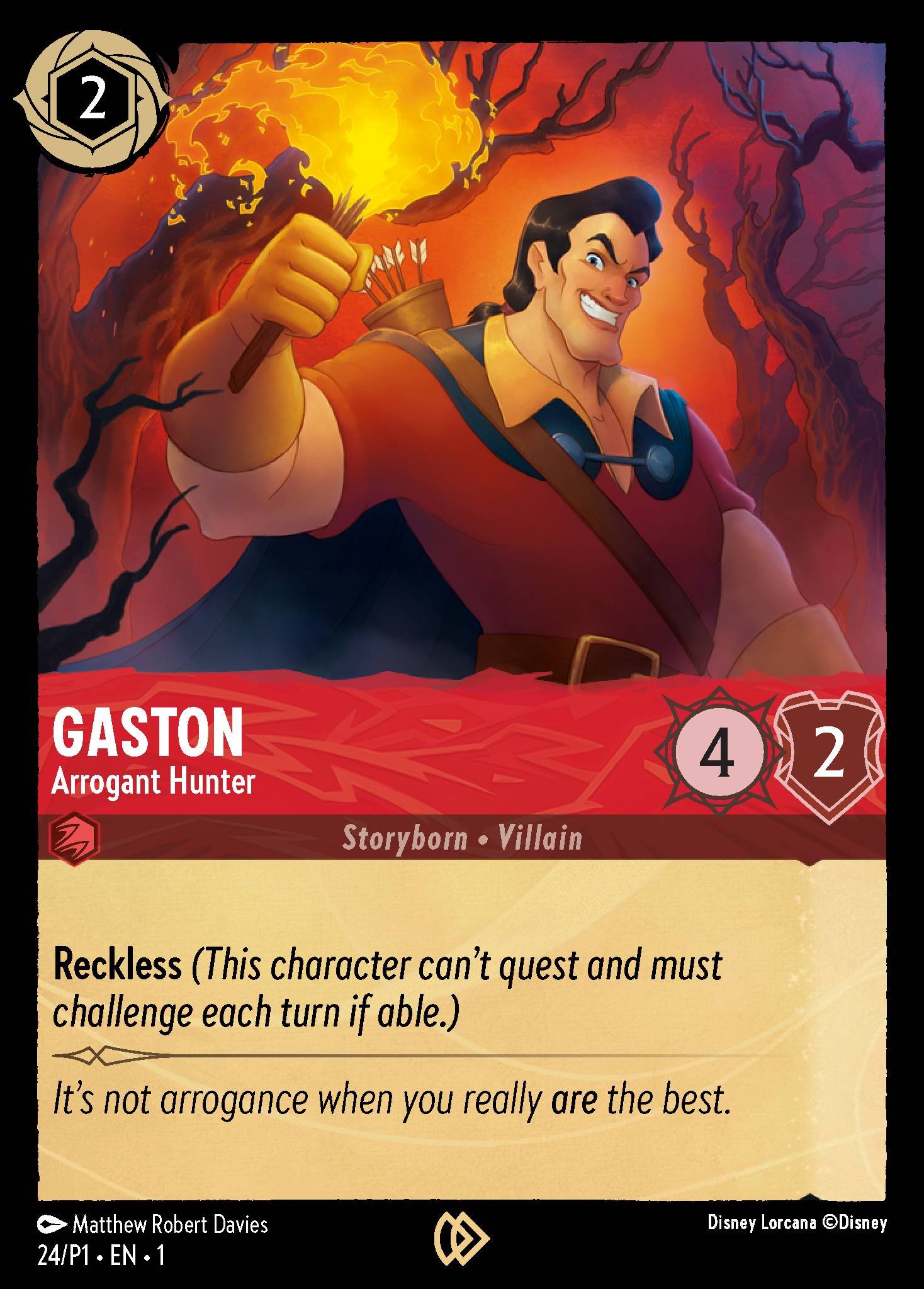
Sapphire
Support 50%, Alert 44%, Ward 37%

Steel
Resist 100%, Alert 56%, Bodyguard 45%, Challenger 40%
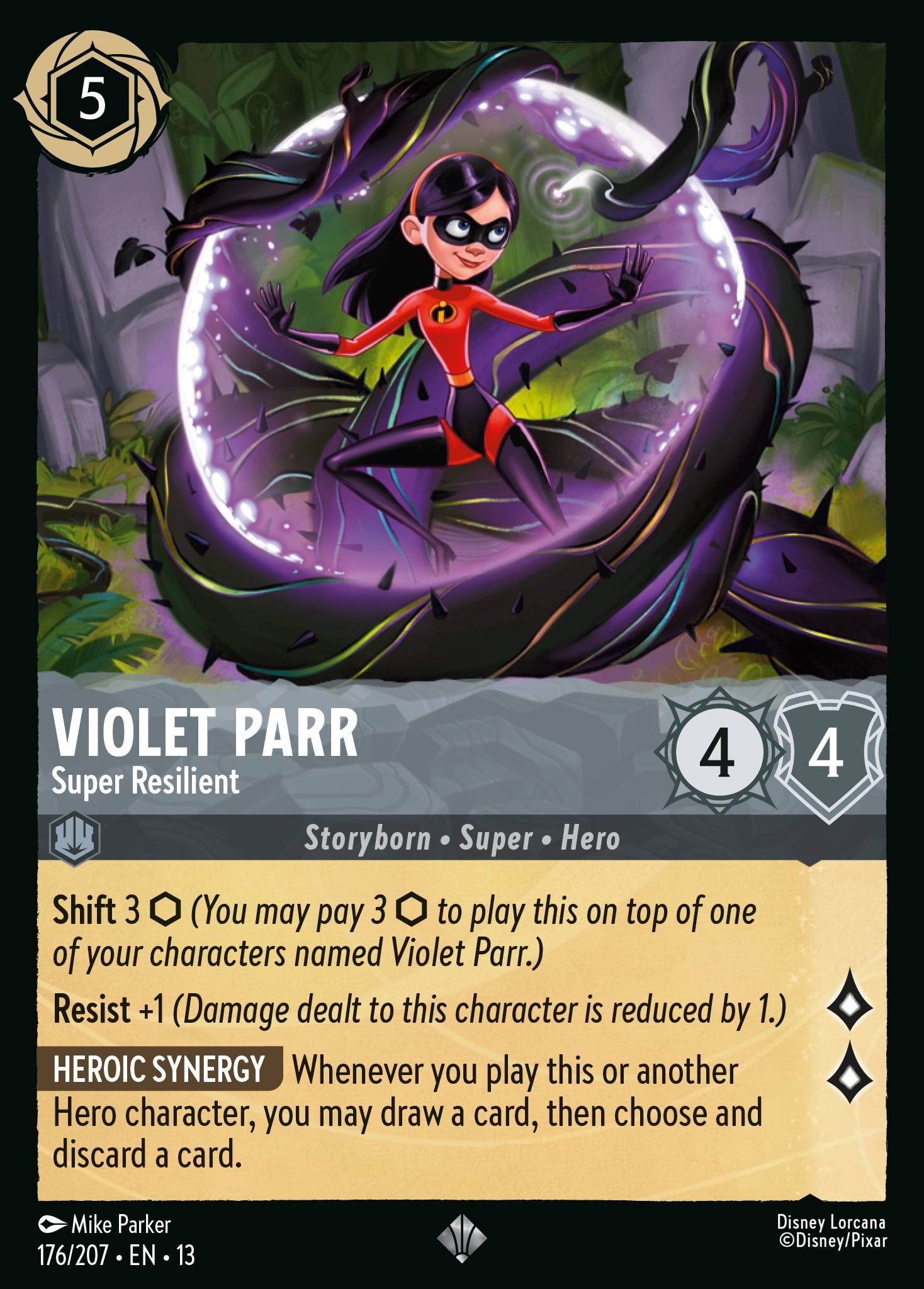
Steel is the only ink that reduces damage. Ruby is the only one that has to challenge. Everything else is shared with exactly one partner.
Every ink is the same size
- 168Amber cards
- 169Amethyst cards
- 168Emerald cards
- 168Ruby cards
- 169Sapphire cards
- 168Steel cards
Single ink cards, counted the same way as every bar above, and within two of each other top to bottom. The clustering is a design decision, not an accident of how many cards each ink happens to have.
Which ink should you start with?
A Lorcana deck may use cards from at most two inks, so the real choice is a pair. The bars above tell you what each pair can and cannot do.
If you want to end games quickly
Amethyst and Ruby are the only inks with Rush, so they are the only ones that can play a character and challenge with it the same turn. Both also have Evasive. Our Ruby Amethyst Invitational winner is exactly that pairing.
If you would rather survive and grind
Steel has every Resist card in the game and Amber has most of the Bodyguards. Between them they hold all of both, which is as close to a purely defensive pair as Lorcana offers.
If you want to protect an engine
Emerald and Sapphire hold Ward between them, which is what keeps a combo piece alive while it works. Emerald brings the Evasive to push damage through, Sapphire brings the Alert to deal with somebody else doing the same thing to you.
Before you build anything
Whichever pair you choose, the decision that settles more of your games than ink color is which cards you are willing to turn into resources.
Read how inking works next. It is the one mechanic a new player can improve at immediately, and roughly one Core card in five cannot be inked at all.
Starting from nothing
Starter decks come as a fixed pair of inks, which makes them the cheapest way to feel a pairing before committing to singles.
That is an affiliate link. It costs you nothing and it helps keep this site free.
Every card in the game is in our card library, with live prices and full text.
Every figure here is counted from the Core legal pool at build time and changes when the pool does. A keyword counts only where a card prints it, never where a card grants it to something else.