
Beast - Aggressive Lord wants to punch things. That's the pitch. Pay two ink, get a 3-strength body that quests for one lore, and then spend two more ink per turn to stockpile cards underneath him.
Do that once and his ability fires: whenever he challenges another character, if there's a card under him, each opponent loses one lore and you gain one. That's a two-lore swing on top of whatever the challenge itself achieves.
- Two-lore swing per challenge. THAT'S MINE taxes lore each time Beast - Aggressive Lord challenges with a card under him, not just once.
- Boost has to be funded. You pay two ink every turn you want to keep the engine running, on top of his two-ink play cost.
- Two willpower is the real problem. Fire the Cannons! at one ink ends him before he ever challenges.
- He rewards aggressive Ruby decks that are already pressuring the board, not slower setups.
The loop is elegant. But there's a catch hiding in the middle of it, and it's worth naming before anything else.
His willpower is two.
That is a problem that doesn't go away no matter how many cards you stack under him.
The swing on a successful challenge
Let's be precise about what THAT'S MINE actually says: "Whenever he challenges another character, if there's a card under this character, each opponent loses 1 lore and you gain 1 lore." That's the full text.
No once-per-turn limit. If he challenges every single turn with a card underneath him, that's two lore swung in your favour each time, stacked on top of his actual challenge resolution.
In a two-player game that's one lore lost, one gained. Fine. In a three-player game, the math gets interesting. Each opponent loses one, so you're swinging three lore total with a two-ink character. That's speculation on my part about the multiplayer angle, but it's the kind of speculation that's grounded in the text.
The Boost keyword, defined under rule 8.4.1, reads: "Once during your turn, you may pay N ink to put the top card of your deck facedown under this card." So one activation per turn.
You pay two, a card goes under him, the condition is met. In practice, players tend to treat one card as enough, since the ability text doesn't reward stacking more than that.


The comparison worth making
Gaston - Frightful Bully shares the Boost 2 keyword and sits at 3 strength and 3 willpower. His ability, TOP THAT!, triggers on questing rather than challenging: if there's a card under him, the chosen opposing character can't challenge and must quest if able during their next turn.
One extra willpower. Questor rather than challenger. Both ask you to fund them with two additional ink each turn.
Here's why they're not doing the same job. Gaston - Frightful Bully disrupts how your opponent plays their characters. Beast - Aggressive Lord punishes your opponent's lore total every time he hits something. They're in different colours for a reason. If you want the disruptive lock, Gaston. If you want the lore swing backed by aggression, Beast.
Where it stops working
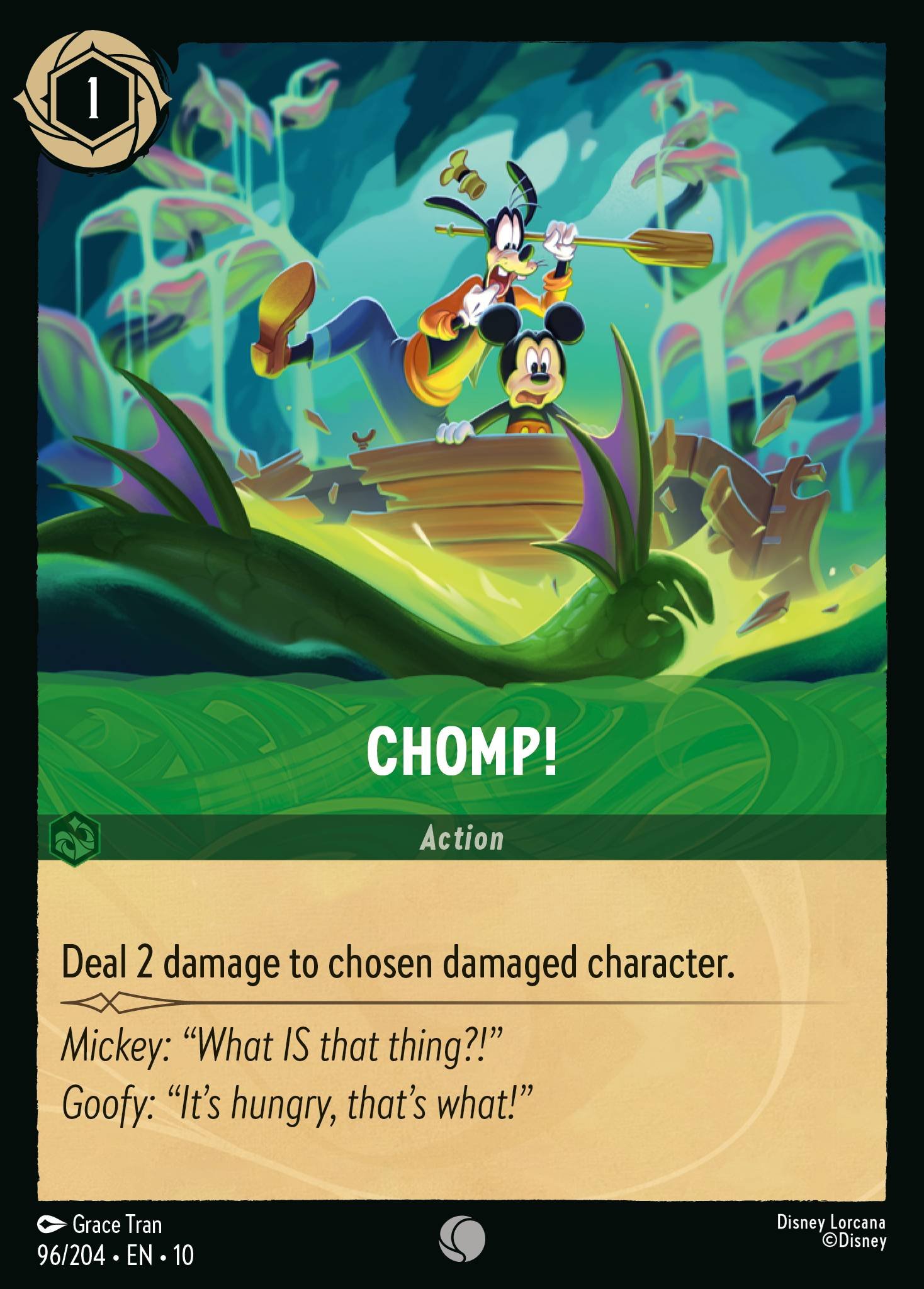
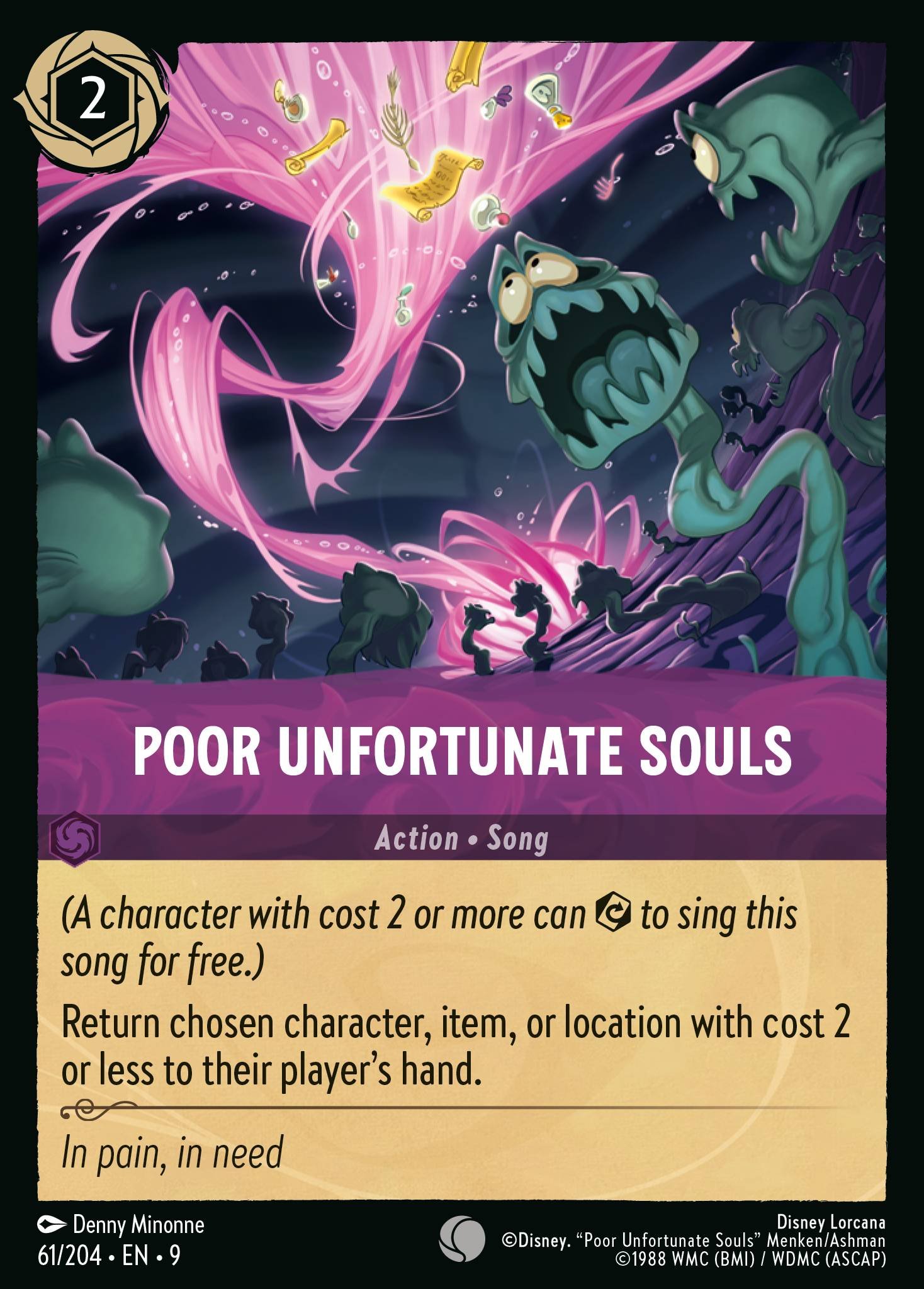
Two willpower means Fire the Cannons! at one ink banishes him. Chomp! finishes him for the same ink, but only once he is already damaged. Poor Unfortunate Souls at two ink bounces him back to your hand without him ever challenging. Goofy - Klutzy Skier at three ink banishes any character, no conditions, regardless of what's under him.
None of those effects deal damage in the rules sense (rule 1.9.2.1 covers what counts as dealing damage, and effects that banish any character with no conditions skip that entirely), so there's nothing to play around. He just leaves.
He also has to survive long enough to challenge. The turn you play him, he's drying. That's a full turn of exposure at two willpower before he does anything.
And Boost costs ink. Two ink the first turn to fund him, two more each subsequent turn if you want the ability active. You're spending four ink total by turn three just to set up one swing. That's meaningful in a format where ink does a lot of work.

The build that makes him worth it
He fits best in a Ruby deck that's already leaning on the board, not building toward it. If you're playing characters that challenge frequently, his two-ink play cost gets you a body that pulls double duty: threatens opposing characters while taxing lore. The Boost cost becomes palatable when you're already ahead, spending freely.
He's not building pressure. He's adding a lore tax to pressure you were already applying.
The version of this that fails is a slower deck that plays him on curve and tries to build the Boost engine from behind. Two willpower gets banished by incidental damage. He needs a board state that lets him challenge safely, not one that exposes him to every one-ink removal spell your opponent is holding.
Gaston - Frightful Bully is inkable by comparison, so the deckbuilding cost is lower. Beast - Aggressive Lord is also inkable, which at least means he isn't a card you have to commit to playing every game. Dead draws can become ink. That's a real upside on a build-around piece.
The verdict
If you're running Ruby aggression and you have the two-ink play cost plus the two-ink Boost budget to fund him every turn, he's doing something no other two-ink character in Ruby currently does: taxing lore on challenges rather than just trading bodies.
Watch whether your deck can protect him through his first drying turn. If it can, he earns the slot.
If you're regularly behind on the board when he lands, he'll be banished by Fire the Cannons! before he ever gets to swing lore, and that's the game telling you to look elsewhere.
Test him in a Ruby aggression shell that can protect a two-willpower character for at least one turn, and if your board consistently lets him challenge safely, build around him. If it doesn't, Gaston - Frightful Bully is the safer investment.
Prices update daily. Price any list as you build it in the deck builder, which reads the same feed as this page, and every card above links to its own page in the card library.
Card links go to TCGplayer. We may earn a commission.