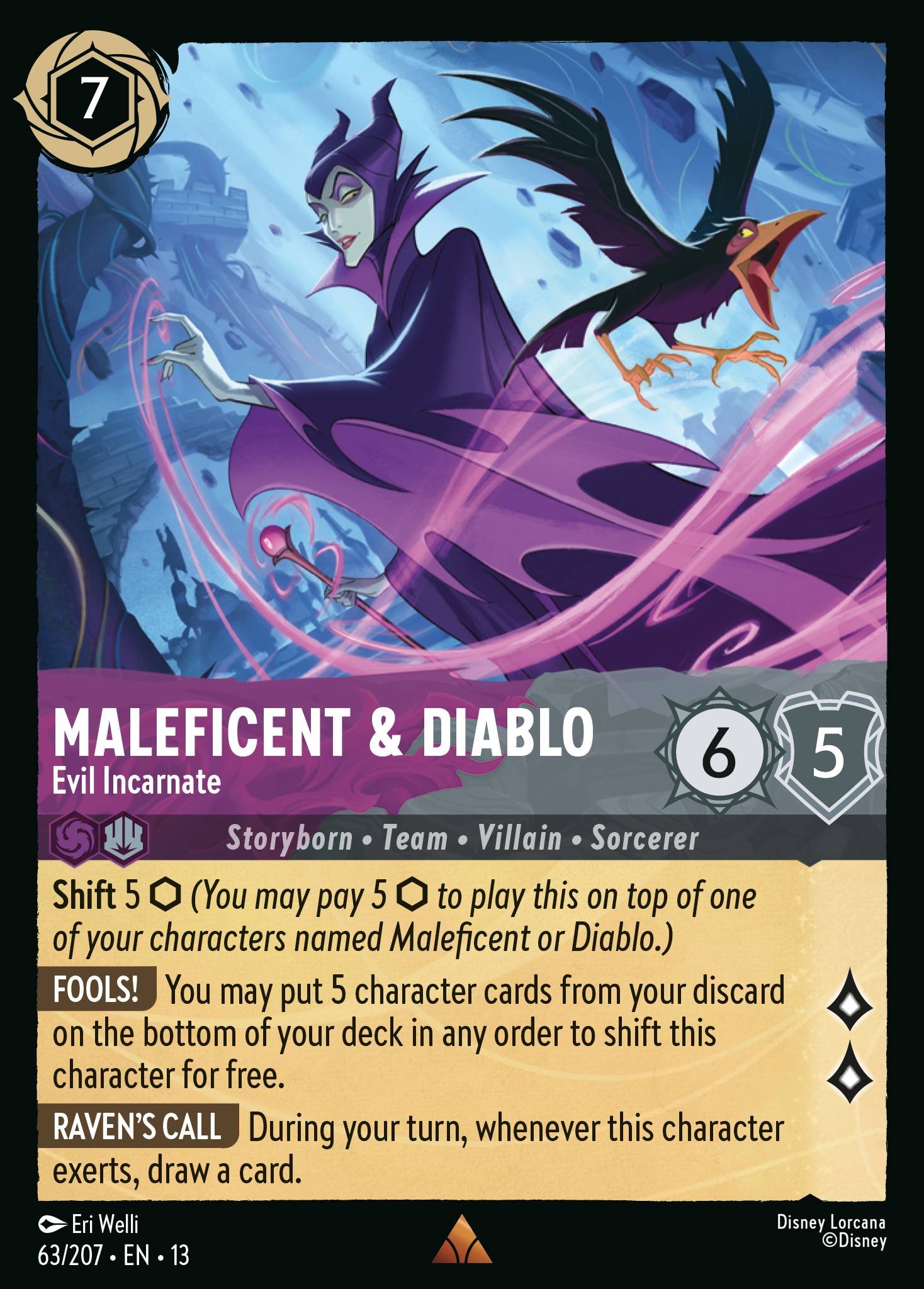

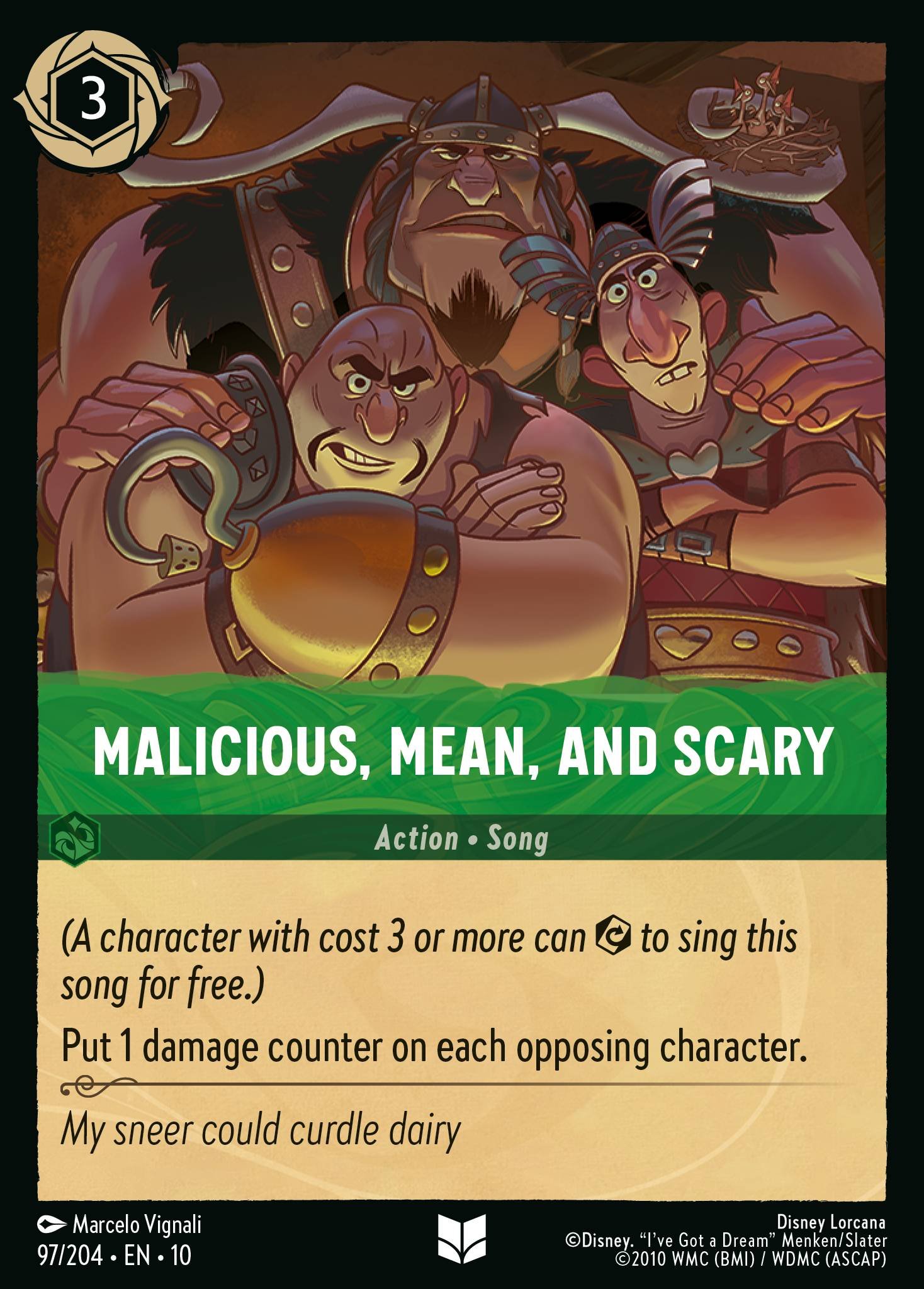
Your opponent has a Resist +1 character sitting comfortably at 5 willpower. You sing Malicious, Mean, and Scary for free, expecting Resist to blunt it. It does not. Not reduced, not partially, not at all. One word on each card explains why, and once you see it you will read every damage effect differently.
- "Deal" and "Put" are two different game terms, defined separately in the rules (1.9.2.1 and 1.9.2.2).
- Resist only reduces damage that is DEALT. Read its reminder text: "damage dealt to this character is reduced by 1".
- An effect that says put a damage counter skips the dealing step, so Resist never sees it. Resist +2 is just as helpless as Resist +1.
- This is not a loophole. It is deliberate design space, and it is how you get through a board that looks untouchable.
The two verbs
The Comprehensive Rules define four things that can happen to damage. Two of them matter here, and they are separate entries for a reason:
- 1.9.2.1 Deal. Placing damage counters during a challenge, or as a result of an effect that deals damage.
- 1.9.2.2 Put. Placing damage counters as a result of an effect that puts damage on them.
Both end with counters on a character. They are not the same action, and abilities can care about which one happened.
Which is why Resist misses
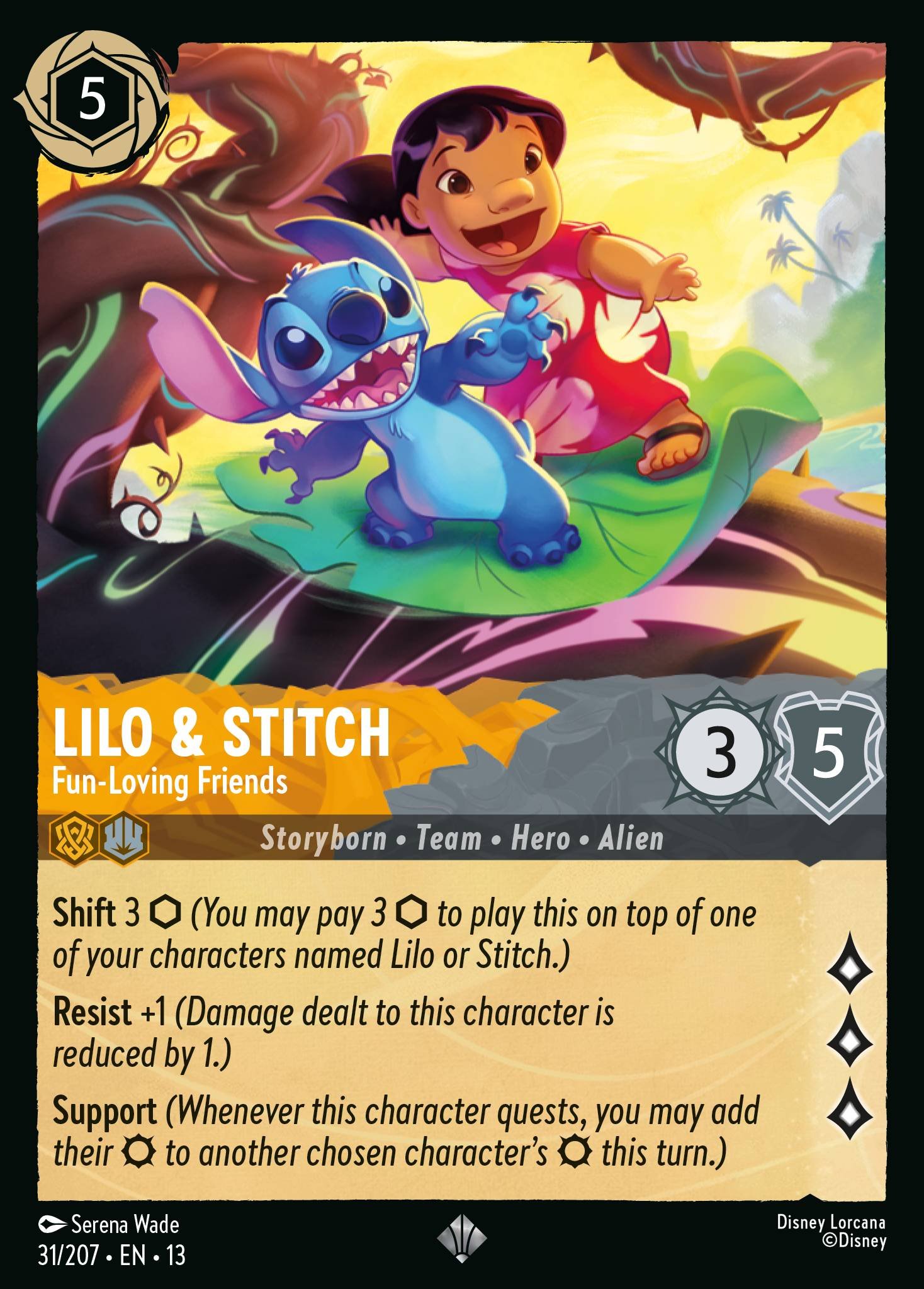
Lilo & Stitch - Fun-Loving Friends (Amber-Steel, 5, 3/5, 3 lore) has Shift 3, Support, and Resist +1. Resist's reminder text is the whole story: damage dealt to this character is reduced by 1.
Malicious, Mean, and Scary (Emerald, 3, Song) reads: put 1 damage counter on each opposing character. It never uses the word deal. So there is no dealing step for Resist to modify, and the counter lands at full value.
Resist is not a damage shield. It is a discount on one specific verb.
And because it is a song, a character with cost 3 or more can exert to sing it for free. You are stripping a point off their entire board, ignoring Resist, without spending ink.
The nuance that catches even careful players
Here is where it gets genuinely subtle, and it is worth knowing because it cuts the other way.
Rule 1.9.5: if an effect would deal damage and that damage is reduced to 0 by modifiers, the effect is still considered to have dealt damage. The character simply "takes" no damage.
So a 1-damage effect into a Resist +1 character still counts as damage being dealt, even though nothing lands. Any card that triggers on damage being dealt still sees it. Any card that triggers on a character taking damage does not. Two more verbs, and they are also not interchangeable.
It is rarer than you think, and it has a colour
We checked the whole card pool. Only eight cards in the game put damage counters rather than dealing damage, and four of those are currently Core-legal:
- Malicious, Mean, and Scary (Emerald, 3, Song): 1 counter on each opposing character.
- Potion of Malice (Emerald, 3, Item): exert and pay 1 to put a counter on chosen character, repeatable every turn.
- Bellwether - Master Manipulator (Emerald, 4): when challenged and banished, 1 counter on each opposing character.
- Shere Khan - Fearsome Tiger (Emerald, 6): Evasive, with a counter effect on quest.
Notice the pattern. Every single one is Emerald. The other four are too, or are an Emerald pair, though all four rotated out of Core and you cannot play them in Constructed today.
Ignoring Resist is an Emerald ability. If you want the answer to a wall, that is where it lives.
That is worth knowing in both directions. If you are playing Emerald, you already own the tool that beats resilient boards and you may not have realised it. If you are building around Resist and your opponent is in Emerald, your protection is thinner than the card text suggests.
How to actually use this
The practical read is that toughness is matchup-dependent, not absolute. A Resist character walls off combat and direct damage. It does nothing against counters. So:
- Challenging into a resilient board? Counter effects go through where challenges and burn do not. This is the answer to the opponent who has built a wall.
- Softening before a swing. One counter on everything does not banish anything, but it moves every character one point closer to range for whatever comes next.
- Finishing damaged characters. A body already chipped in combat can be picked off by counters even though Resist would have blunted another challenge.
- Building defensively? Do not assume Resist covers you. Against a deck with counter effects, willpower is the only stat actually protecting you.
An effect that says put a damage counter skips the dealing step, so Resist never sees it.
The habit worth building
Read damage effects down to the verb before you plan a turn. "Deal" and "put" look interchangeable in conversation and are not interchangeable on the table, and the same care applies to "dealt" versus "takes".
This distinction is only going to matter more as the card pool grows, because it is a lever designers reach for deliberately: it gives them a way to answer resilient boards without printing bigger numbers. Learn it once and you stop being the player wondering why Resist did nothing.
Every card in the game is in our card library, with live prices and full text.
Want more of this kind of thing? Our free course covers the rules from the beginning, and the Shift keyword breakdown is the other place where one word changes what a card can legally do.