

Tier 5 · Read the Table · Lesson 3 of 8
Sequencing
Finding more than one line, What a line actually is, Finding more than one line
You will lose games this month to plays you already chose correctly. Not the wrong cards. The right cards, taken in the wrong order. Sequencing costs nothing, needs no new cards, and is available to you on every single turn you will ever take.
The rules hand you one freedom and take another one away
During your Main Phase you can ink a card, play a card, use an activated ability, quest, challenge, and move a character to a location (4.1.3). All of them as often as you can afford, except inking, which is once per turn (4.1.1, 4.2.3). What almost nobody reads is the sentence about order.
The active player can take turn actions only during the Main Phase of their turn and can take them in any order. The active player must complete each turn action in its entirety and players must resolve anything in the bag that resulted from a turn action before the active player takes their next turn action.
Comprehensive Rules 4.1.2
In plain terms: the order is entirely yours, and you cannot change your mind partway. There is no pausing a challenge to play a card first. Each action finishes, everything it triggered resolves, and only then do you pick the next one.
So the order is a real choice you make every turn. Most players make it by accident, taking actions in the order they occurred to them, which is the order of habit and not of value.
Information before commitment
Of the six turn actions, only two can tell you something you did not already know. Playing a card can draw you one. A challenge leaves a board you have not seen yet. The rest just spend what you already had.
That gives you the first ordering rule, and it is nearly the whole lesson: anything that gives you information goes first. Every decision after it is made with more.
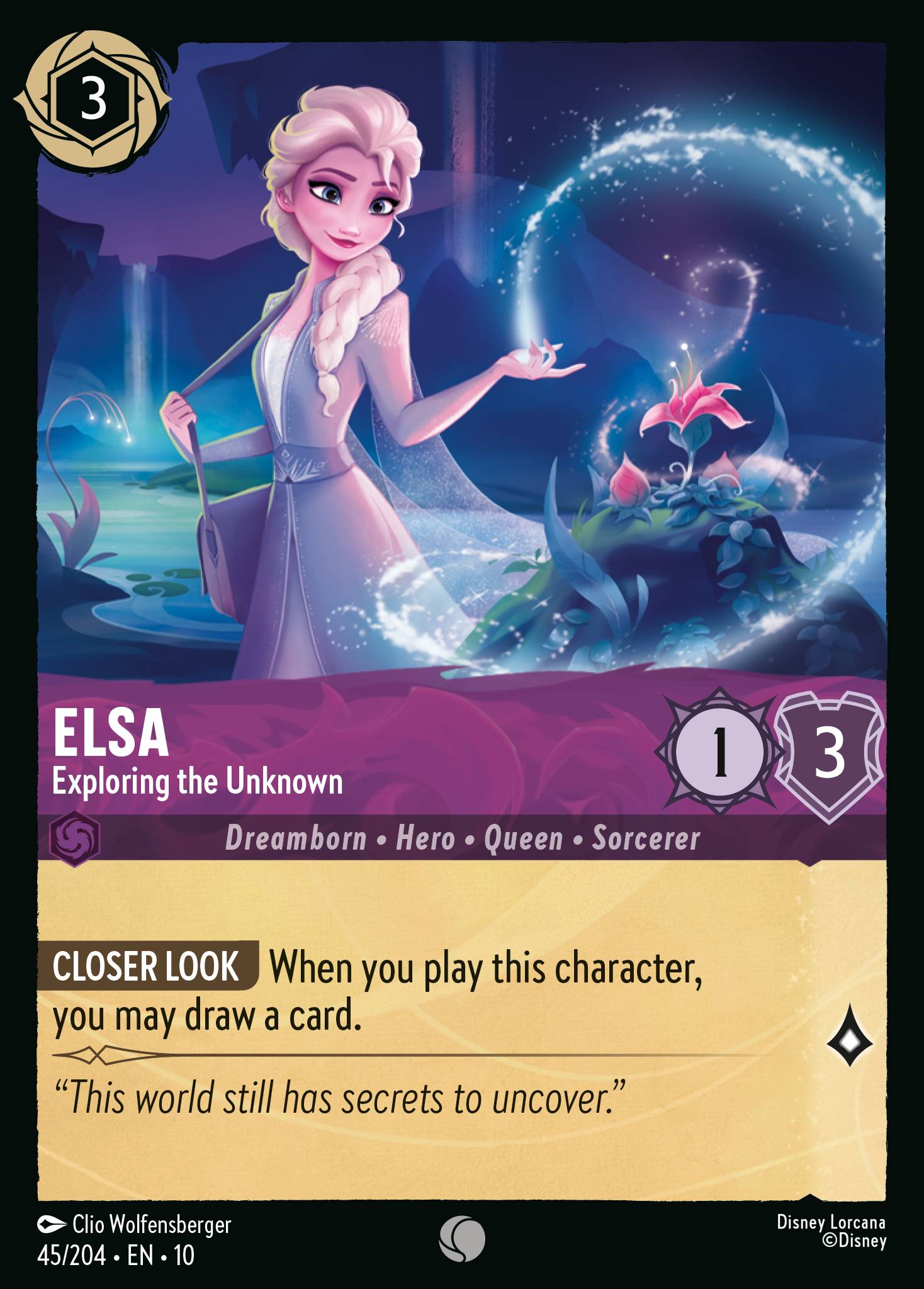 Elsa - Exploring the UnknownAmethyst · 3 ink · 1/3 · 1 lore · inkable
Play her early and you may draw a card, and everything else you do that turn is chosen with that card in hand. Play her last and the same card sits there doing nothing until next turn. Same card, same ink, and one of those turns had a card in it that the other one did not.
Now the sharpest version, because it comes up every game. Inking is limited to once per turn (4.2.3), but it is a turn action like any other, so you can take it at any point in the Main Phase (4.1.2). Nothing forces it to be first.
If you do not need the extra ink for the plays you intend to make this turn, ink at the end of it instead of the start. You will be choosing which card to bury out of a bigger hand.
Most players ink first thing, every turn, before they have looked at anything. It is the most automatic action in the game and the only one on the turn you can never take back.
Commitment last, and what commitment actually costs
Questing exerts the questing character (4.5.1.3). That looks like the whole price, and it is not, because of a rule sitting one section away: to challenge, a player chooses an exerted opposing character (4.6.4.2). A ready character cannot be challenged at all.
So questing does two things in one action. It gains you lore, and it hands your opponent a legal target that did not exist a moment ago. That is a commitment and you cannot undo it.
Challenging exerts your character too (4.6.4.4), so it costs the same body. The difference is timing. A challenge happens now, and the rules are explicit that the dust settles before you move on: after the damage step, once everything in the bag has resolved and any "after the challenge" abilities have happened, then you choose your next turn action (4.6.7).
A challenge is a question you get answered mid-turn. A quest is an answer you give away. Ask first, commit second.
One turn, written out twice
Your side of the table. Both of them dry, both ready.
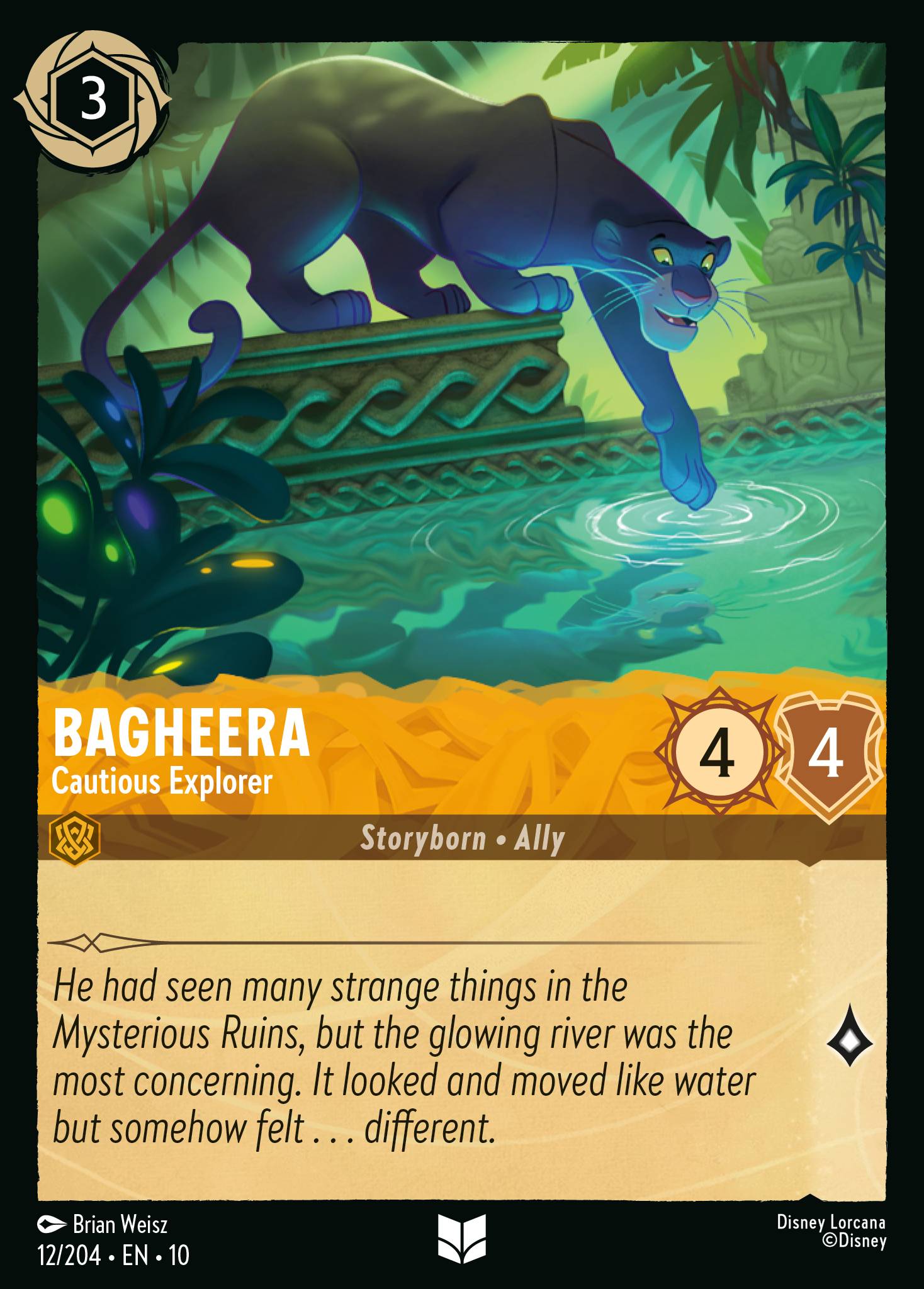 Bagheera - Cautious ExplorerAmber · 3 ink · 4/4 · 1 lore · inkable
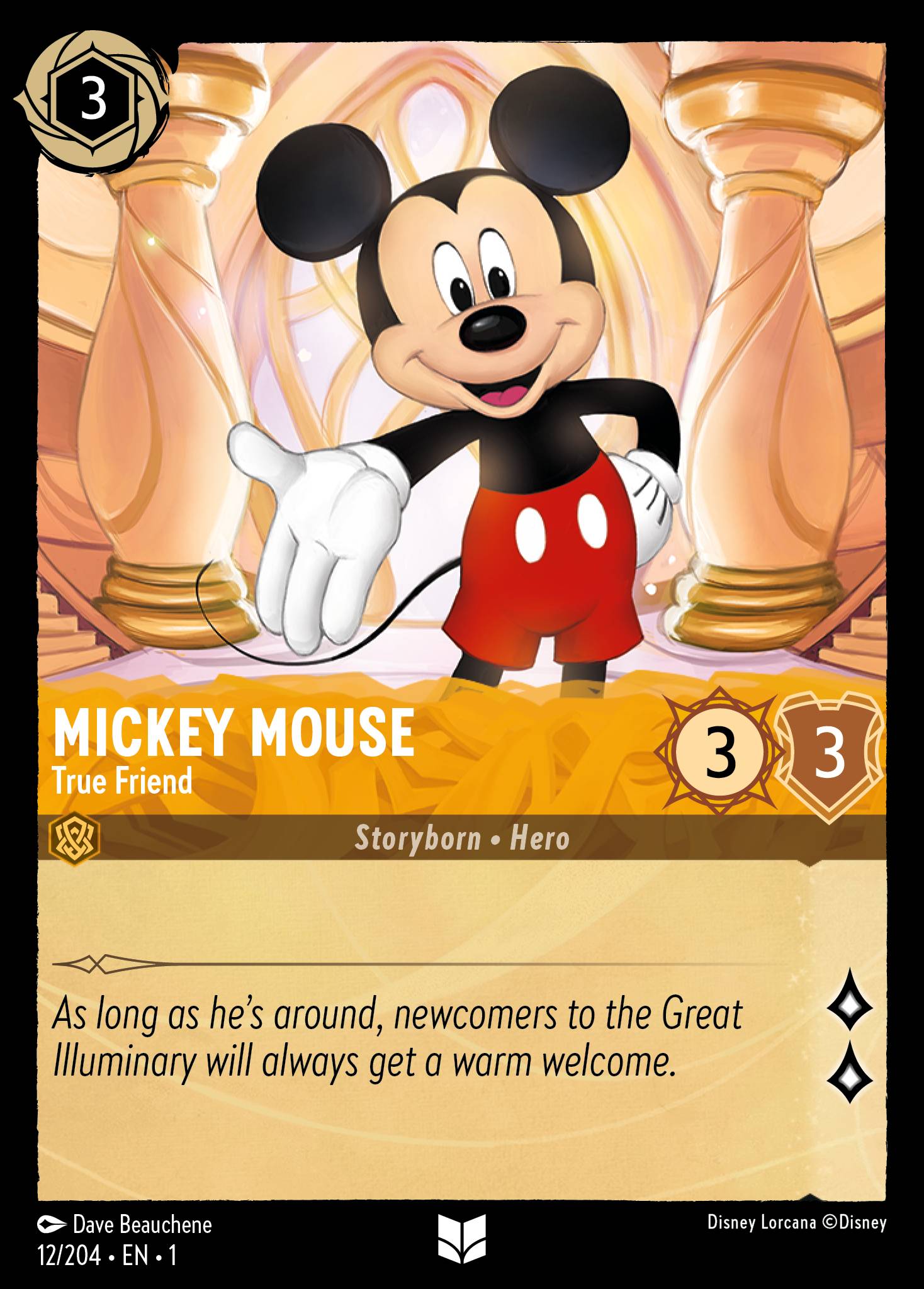 Mickey Mouse - True FriendAmber · 3 ink · 3/3 · 2 lore · inkable
Their side: one character exerted from questing last turn, one ready. You have ink standing, Elsa in hand, and enough ink to play her without inking first.
Line A, the reflex. Ink a card. Quest with Mickey. Quest with Bagheera. Play Elsa with what is left and draw.
Line B, the same four actions. Play Elsa and draw. Challenge their exerted character with Bagheera. Look at what that left behind. Then decide whether Mickey quests or stands there ready. Then ink whichever card in your hand is now the least useful.
Count what Line B knows that Line A did not. It sees the drawn card before it spends anything. It sees whether the challenge banished their character and whether that set anything off. It decides Mickey's turn against the board that actually exists. And it inks from a larger hand, after every other question is settled.
Line A made four decisions and then found out. Line B found out four times and then decided. Same cards, same ink. Only the order changed.
One detail, because it confuses new players: Elsa entered play this turn, so she is drying and cannot quest, challenge, or exert to pay a cost until the start of your next turn (1.7.5). Playing her early does not make her act early. It makes the draw arrive early, which is the point.
The pull is not laziness, it is comfort. Questing pays out immediately, in a number you get to move. Inking feels like progress. Both are certain, and certain feels good, so the brain reaches for them first and then makes the hard choices with whatever is left over.
Invert it. Uncertain actions first, certain actions last. The certain ones will still be sitting there in two minutes, unchanged. The information will not.
You have enough ink standing to make every play you want this turn without inking. When should you take the ink action?
- First, before anything else, so you do not forget it. The habit, and it gives up the most. You are choosing which card to bury before you know what you draw. Forgetting is real, but the fix is a check before you end your turn, not an early choice you can never reverse.
- Last, once your other actions have resolved. Right. Inking is a turn action, so it can be taken at any point in the Main Phase (4.1.2), and it is limited to once per turn (4.2.3). Taking it last means choosing from the biggest hand you will hold all turn.
- It makes no difference, the card reaches the inkwell either way. A card does. Which card does not. Inking is a choice between the cards in your hand, and every card you draw first changes which one you can afford to lose.
Where this is worth nothing
Four honest limits, and you should hold all of them.
Most turns have exactly one order. If nothing later in the turn depends on how anything earlier turns out, there is no sequencing decision, only a sequence. Thinking hard about order on those turns is waste. It pays out on contingent turns, which were the turns in doubt anyway.
The rule inverts the moment you need the resource. If you cannot make your plays without the extra ink, ink first. Obviously. Information before commitment is subordinate to being able to act at all, and any principle you follow off a cliff was being followed wrong.
The edge is smaller here than the idea deserves. Lorcana has no priority system, so your opponent cannot respond to anything during your turn. Your order never baits anything out of them and never walks into anything. Sequencing here is purely about what you know when you decide, which is a narrower thing than sequencing means in games with instant-speed interaction.
Slow is a cost you pay in public. Events have time limits, your opponent has an evening, and a long visible think tells them the turn is close. That is information leaving you, for free, while you sit there optimising.
- You choose the order of your turn actions (4.1.2).
- Each action must finish completely before the next starts.
- Anything that draws or reveals goes first.
- Questing exerts you, which makes you challengeable. Commit last.
- Ink last, unless you need that ink to act.
Pick one turn where you were going to ink anyway. On that turn only, do everything else first and ink as the very last thing before you say you are done.
Once. Not every turn. Then check the only thing that matters: was the card you inked the same card you would have inked at the start?
Rules quoted from the Disney Lorcana Comprehensive Rules, version 2.2.0, effective 9 July 2026. We check every rules claim on this site against the current document rather than quoting from memory, because rule numbers change between versions.
Next: The three principles. It names the three things every good order is actually trading between, so you stop needing a separate rule for every situation.
No account needed. Sign in and your progress follows you anywhere.